March 2, 2014

Retro visit: Laconia has the Spot!


Yesterday the family and I took a trip to 1984. Like, for realz.

When I was 10, there were arcades and cabinet games everywhere. There were arcades that stood alone as businesses, as well as rows of different gaming machines that stood just inside the doors of many other establishments. Malls had them. Convenience stores had them. Again, they were everywhere. It was the heyday of the coin-op bonanza, and the swan song of an era soon forgotten. It wasn't long after this that Nintendo NES invaded our homes and changed in-home console gaming for ever. No complaints here, even though it was a bit bitter-sweet. But in 1984 everything was about the Quarter... or the Token.
We lived in Southern Maine. Just down the road, and over the border into NH was a town called Dover, and in that town was a place called Funspot. This location rivaled "Chuck E Cheese" and "Dream Machine" as THE arcade to play at. It was a fun filled room complete with skeeball, indoor batting cages, air hockey, and most importantly, all of the cabinets a young child would ever want to play. I pumped quarters and tokens into those machines and chased high scores for many of my adolescent years. It is a fond memory I have of a way to spend my time, and money, in a seamingly benign way...as opposed to say buying smokes and drag racing cars.

Fast forward 30 years and arcades are near extinct. Only a handful of locations with more than one or two "decent" cabinets still exist. Sure "arcades" are still around... but they are merely ticket-chaser games. Pump your quarters into them to stop a moving light at just the right spot to earn a bounty of tickets. Chuck E Cheese is where two of my kids have had about 6 different birthday parties at. Sure, it's fun... but it isn't the same. By any stretch. The games they have are high tech racing games or simulation games, and not a single pizza fingered child in the place knows what it is like to chase a high score...or better yet, the feeling of elation when you do win and earn the chance to place your three initials into the game's leader board for all to see. The only bragging rights you get are contained within a fist-full of paper vouchers worthy of redemption towards a cheap plastic kazoo, or a spider ring. If you are lucky, you can "buy" an overstuffed, rock hard plush toy the size of a small doll. No thanks. I'd rather see "CEF" posted on a splash screen for all to see.

Yesterday my two oldest children got to see the high score race in action. We took a trip to Laconia NH, a quick hour drive from home, and we visited Funspot. The kid's had no idea what lay waiting for them inside.

Now that arcades are a withering and dying destination, this one can easily claim the title of "The World's Largest" with over 600 cabinets available to play. All of the favorites are here; Space Invaders, Asteroids, Mario Bros., Elevator Action, Tron, Gyruss, Galaga, Tetris, 1942, Pong, Gun Fighter, Xevious, Pole Position, Gauntlet, Joust, Rally X... the list goes on and on!


The entire place was a Museum, literally. The American Classic Arcade Museum to be exact (ACAM).

The lobby had a display case of favorite game devices and collectibles from yesteryear, complete with a classic pac-man trash can. There were dozens of sections of cabinet games, each separated by the manufacturer: Atari, Taitto, Sega... It was a Mecca for classic game lovers.

My kids didn't quite get the nostalgia, but the wife and I certainly did! It was like being 10 again. We spent the first 15 minutes or so going through the different areas and getting a feel for the different games we could play. It was a tough decision, but we eventually purchased our tokens an we began the gaming. For the next 3 hours we cruised around the play floor dropping tokens into the systems and playing rounds of games for the thrill of points.

It was nice to jump back in time and see the sights, but I can say for certain, it didn't hold the interest of my children the way these games used to for me. Maybe because the graphics of today's systems are so much better? Perhaps it was because the games they play have a lot more depth than just shooting aliens or bopping turtles for a handful of points? I think it is a combination...but whatever their reasoning it was definitely interesting to watch them interact with these antiquated systems.

Overall the trip was a lot of fun. I know I probably had the most fun, but the indoor mini golf and the bowling alley helped add to the excitement for a final weekend of winter vacation for the kiddos. Who's to say we won't go back again soon and their love for the classic will grow. I do know one thing: unlike the circuitry and capacitors within those cabinets, my love for standing in front of a cabinet vying for my chance to enter three letters into a leader board will never die.

Until next time...
-CF

(Funspot is located at 579 Endicott Street North, Laconia, NH 03246. On the web you can find them at http://www.funspotnh.com)


June 5, 2012

E3 is HERE!

I know I know... it's been a handful of days since my last post. I've done it again... I imply just can't get the hand of this blog thing.. posting all of my thoughts up there on a near daily basis to try and keep up with all that the gaming world has to offer.

I try though. I will say, with all of the lame crappy stuff I've seen so far from the E3 press conferences and game releases... only one truly stands out to report on.


WATCH DOGS.


It is a new IP open world title from Ubisoft centered around the digital footprint we all leave behind. You play as Aiden Pierce, a hacker who can infiltrate the computers running the power grid, phone system, personal devices and pretty much anything that is connected to a computer. 

Though watching this trailer seems like a game-play trailer of a playable version of TV's "Persons of Interest" the graphics and fluidity are phenomenal. Touted as a PS3/XBOX 360 title, the game certainly challenges the engines of these systems and focuses on the next gen's capability.

It was a refreshing look at a tired sea of FPS's and rhetoric of the same old same old from the rest of the press releases. I hope we see more of this style of art/gameplay in the days to come.

-Chad

May 20, 2012

Where to go from here?

(From email, sorry no photos)

<I>Article Question:
Which should I post on next? Part II of the next gen article, images and video on the current state of the portfolio, or begin the series on the 2012 computer build?
</i>

Plugging away and working hard at multiple projects at once makes it hard to finalize and complete any single task; especially when they are all large and extended in length; ie. My portfolio for SCAD, studying for the GRE, freelance projects, board game design ideas, UDK level... I'ts hard to complete anything without jumping from one task to another.

As I work on my UDK level for my portfolio entry, (part of the admission process for my MFA @ SCAD) I have been experiencing SERIOUS feature creep. So much so that I had to step back from the process and "cool off". I started with a simple building walk through in a desert setting, then I created meshes and materials, added lighting and terrain and textures to add to the look of the level. Each newly designed static mesh had to be modeled in 3DS Max, textured and exported, then imported and placed. The level still seemed vacant though, so I researched kismet, added some locked doors, and attached triggers to keys and animated the doors opening upon using the correct key. Now that I have "gameplay" in the form of a "lock and key" search I want to build on the premise and create a variety of keys and color code them to different areas in a labyrinth form... If only I had 6 months... As opposed to days! It would certainly move quicker if I had a better system with which to develop on. This 1.8 gHz laptop with 1GB ram crrraaaaawwwwlllllssssss....

Moving on from the UDK level, and the frustration of lag, I figured I would animate some sequences of models and scenes I had developed in 3DS max. Creating fly-throughs and 360 degree model views are also encouraged for the portfolio submission. Sounds good to me. Set up some lighting, a nice smooth camera on a path, mental ray lights/shadows/material, a few tweaks an voila! Oh yeah.... Slow computer. 28 hours later I am 126 frames into the 301 frame animation. Grrrrr. Thank god I'm rendering to stills so at least I can stop start and not lose the time. I wish I could upgrade this machine!

So needless to say, the computer I am working on is too slow. It was, after all, a $400 purchase 3 years ago... Nothing extravagant. Certainly purchased for general use, not as a workhorse. Too bad the Toshiba did fart out... Otherwise I'd be on that and doing fine. But as I close this post I contemplate my next one... Do I finish the 2nd part of the "next ge article"? Do I post images/video of the projects? Or do I begin the series on the new build. Either way.... I have to do all of them at some point, but I ponder which to do first. Suggestions?

-C

Sent on my Sprint® BlackBerry® because Im too lazy to get off of my couch and use my computer...or Im driving.

May 16, 2012

Time flies

Hey followers-

I know its been a bit since I've posted, but it hasn't been without just cause. I've been wrapped up in UDK working on the level design and "reel" for my portfolio for SCAD.

I know I left you hanging with the last true post pointing at the possible PS4 announcement and my thoughts on the next wave arriving... I haven't forgotten you!

Later today I will post a few videos of the walk-through, and discuss some of my work flow in an entire UDK focused post. It won't be a tutorial, more of a review of how I got to where I am.

Before E3 I will post my final thoughts on the next gen idea, but for now I am on deadline with taking the GRE and finishing the portfolio... Not to mention still teaching and working the other job, and doing the freelance work! Needless to say I am swamped!

I will bring the level design post later today/tonight so stay tuned. Happy game playing peeps!

-C
Sent on my Sprint® BlackBerry® because Im too lazy to get off of my couch and use my computer...or Im driving.

May 5, 2012

Are we ready for the "Next Gen" of Consoles?

With my last blog I had mentioned the possible release of the new PS4 this fall/winter. It seems to be about "on target" as far as previous release dates are concerned, but are we really ready for a "Next Gen" console release war again? Though the hardcore gamers say bring it on, would the general consensus of the masses embrace a release of a console from the big three in the next 6-12 months, or shun it and stay wed to the system they currently use; and are most likely quite happy with? Or will the power of the new systems just be juxtaposed by the PC computing strength? 

This is Part 1 of a two-part post.

Quick console release history:
(For a complete list, this is a great page.)
The first generation of home gaming systems fell in the 70's with the Magnavox Odessey and the Atari 2600 soon followed. Everything was hunky-dory for a while, then the crash hit. Attribute it to what you will; too many cooks in the kitchen, a multitude of sub-par released cartridges for the systems came out, people generally desiring being in the arcade as opposed to watching cheap 4 and 8 color knock offs on their small TVs at home...What ever the reason you want to blame it on, gaming at home was nearly eradicated. The disillusioned public didn't want to "play".

Then the paradigm shift occurred...1985 brought the release of the groundbreaking and game changing NES to our homes. The race was on. Sega jumped in, NEC wanted some, Atari and even Apple played a part in there too... everyone wanted a peice. Every handful of years or so, ever since the NES, a surge of computing and graphical power is released with a new console system; each one competing for the top of the pile with the faster/prettier system. First we jumped from Atari/Coleco vision to the NES who brought us "8-bit", then we surged again from "8-bit" to "16-bit" with the release of the Genesis, SNES, and TurboGrafix. On and on it went and by the mid 1990's we had 4-5 major players vying for the top slot: Atari's Jaguar, Sega's Saturn, Sony's new Playstation, Nintendo's N64, and the 3DO.

By the 6th gen we had three major manufacturers, and today, here in the7th generation, the three major systems (ignoring mobile and handheld all together for this article) are the Microsoft's XBox 360, Nintendo's Wii, and Sony's PS3. With the advent of technology through the years, systems have fought over graphics capability, hard drive space, processing power, inter connectivity (I'm still curious about all those extra ports on my old Nintendo systems...), WiFi/Networking, web access, BluRay, 1080p... As a consumer, this battle is great. Their war for the best constantly releases new tech to us with better and better capabilities. We Win! But... do we?

PC progress/Mr. Moore
Gaming consoles are just half of the story in the eyes of this writer. The interesting track record of the release of consoles over the last 30 years is that they have been offset by the slow and ever gradually changing curve of Moore's Law and processing power. If we couple that with the increase of RAM Speeds, HDD space, GPU/Video card capability, we find the curve is a trend that is offset by the stair-step of the console release.

Every time a console is released the hardware is fixed, in that none of the architecture inside can be upgraded by simply plopping in more ram, or replacing the cpu. In order to increase power and output, the whole system needs to be updated, hence another generation. PCs on the other hand have the upgradability to be able to grow with a user's desire. Want more ram? Simply replace or upgrade what you have... barring any motherboard (MoBo) limitations. Need more processing power? Pop off the old CPU and replace it with a newer, shiny, faster one (again, MoBo dependant). Same goes for disk space, cd/dvd/bluray drives, video cards, sound cards... all of the components are upgradeable... based on the MoBo limitations of course.

One can assess a computers updatability, or "future proofing", by simply looking at a mother board's capability. If you buy a motherboard that can handle what you need now, but the end of the line is near what you are buying into... you have a short (relatively speaking) lifespan of upgrade-ability. Buy into a decent board with architecture for the future and you have a stable platform on which to build a speedy beast for years to come (Watch for this article soon... "The New Gaming PC build")

But how does this tie into the VG Console you say? Or more importantly, how does this relate to the readiness of consumers to purchase a new wave of consoles starting this winter? Well lets look at the timelines side by side:

Time for upgrade?
If we look at the processing speeds, RAM speeds, and HDD space available for computers starting with 1995, along with their console counter part, you get a good cross section of the average computer available at the time compared to the console. Now, I could spend weeks compiling all of the data and comparing all of the options. (...please, go ahead and do that if you want to, and add to this article... I sure as hell am not!) What I am doing here is a simple comparison on the average, in lamens terms, so as to produce an example to build my premise on. This is a hypothesis in the making from a blogger, not some Scientific American article. :-)


In 1995 a new computer listing might look something like this:
90Mhz CPU
800 MB Hard Drive
8 MB RAM
15” CRT Color Monitor
2 MB Video Memory
2X CD-Rom
...and it could cost anywhere around $2000-$2800 bucks.


For comparison, the Playstation (Released in 1994) came with:

MIPS R3000A-family R3051 @ 33.8688 MHz
Games came on Black CDs (700 MB)
Memory cards for saving game data ran in 1, 2, and 4 MB sizes
1 MB Video Memory
2X CD-Rom with a 128 kB buffer
...and it cost around $300 bucks for the September release. It dropped to $200 in May of 1996.

...And the N64 (Released in 1996) came with:


93.75 MHz NEC VR4300
Games came on cartridges with saving capability upon them (4MB to 64MB)
Memory cards for additional save data ran in 1, 2 and 4 MB sizes
4 MB RDRAM Memory (expandable to 8)
Video support for SDTV up to 480i (A majority of the games used the 240p/288p)

...and it cost $250 when it released in September of 1996.


 Now, lets jump forward five years... 2000/2001. Home gaming systems were in full swing, Pc gaming was on the rise commercially, and the home computer/dot com boom was thriving. Gone were the days of the PC being a "worker's tool" or only for "businessmen", as students and parents used them for everyday enjoyment and personal use. The rise of the prevalence in the home computer was making the need for speed, and cost effectiveness more commonplace. The gaming system, however, was still just that... just a gaming system... for now.


In 2000 an average computer listing may have offered these options:


300 Mhz  - 500 MHz CPU
12 - 20 GB Hard Drive
16 - 64 MB RAM
4 MB  - 8MB Video Memory
8X CD-Rom
...and it ran at about $1800 - $2400 when purchased new.


The Playstation 2 (Released by Sony in 2000) came with:


64-bit "Emotion Engine" clocked at 294.912 MHz

40 GB HDD available (as an add on)
8 MB Memory cards for saving game data.
32 MB RDRAM
GPU clocked at 147.456 MHz
DVD/CD-Rom for games, music and movies.

...and it cost around $300 bucks for the September release. It dropped to $200 in May of 1996.


Nintendo's Game Cube (Released in 2001) had:


IBM PowerPC "Gekko", 486 MHz
Games came on proprietary GameCube mini disks with 1.5 GHz capacity

Memory cards with various sizes (16 MB, 24MB, 32 MB, 64MB...)
43 MB total Ram (16 MB DRAM, 24 MB "Splash" ram, 3 MB embedded ram within "Flipper")
162 MHz "Flipper" LSI GPU
Video modes of 240i, 240p, 480i or 480p @ 60 Hz

...and it cost $200 when it released in November of 2001.


The XBox from Microsoft (Released in 2001) ran with:


Custom 733 MHz Intel Pentium III "Coppermine-based" processor
Games came on DVDs
8 - 10 GB HDD formatted to FATX
Memory cards for additional save data ran in 4, 8 and 16 MB sizes
64 MB of DDR SDRAM @ 200 MHz
233 MHz "NV2A" ASIC GPU
Video resolutions of 480i, 480p, 576i, 576p, 720p, 1080i

...and it cost $300 when it released in November of 2001.

As you can see, the new computer was still a little slower than the console at their release, depending on the components you purchased and how much you wanted to spend. Remember though, start small and grow with the times in the case of a computer, but purchase once and never upgrade with the console. In 2000/2001 a new bench mark was set with the consoles and over the next few years the computers slowly caught up.

Stay tuned for part two of this article which will review the 7th generation console release in 2005/2006 along with a side by side comparison on the average computer available then. I will also reveal my opinion/position on the possibility of the release of the 8th generation of console based on the current PC computing market and my thoughts on the 8th gen's release in the next 6-12 months.

Chad is an Adjunct Faculty member teaching video game design in Boston, MA. He is currently a freelance designer and owner of Phlume Artist Management. He can be reached for comment at chad @ phlume.com.

April 30, 2012

PS4 for xmas 2012?

The whispers are getting louder... but are they worthy of listening to? Remember... "Secrets don't make friends."

("Leaked" launch video and countdown are at the bottom of this page. Scroll down to view it, or click here.)

Of course we all KNOW the next gen consoles will be reaching their release dates soon. Sony has had a history of around a 6-year cycle for it's ever revered console. It started with the release of the original Playstation (now aptly named PSOne) in December of 1999; in Japan only, though. We here in the US had to wait for our release until September of 1995. The PS2 was announced in 1999 and then released in 2000. We were graced with the PS3's announcement at E3 in 2005, and then it's Japan/North America launch was in November of 2006. Rumor has it we may see the new PS4 (Or "Orbis" as it has been rumored) by the end of 2012...just in time for jolly ole' Saint Nick to drop in and deliver it to millions of screaming kids...and their Dad's ;-) It follows a routine cycle of every 5-6 years. The eve is upon us!


CONSOLE USA RELEASE JAPAN RELEASE
PSOne 1996 1995
Playstation 2 2000 2000
PS3 2006 2006
PS4 "Orbis" 2012? 2012?


So what does this mean? Well, realistically, nothing. It only means that about 6 years have passed since the PS3 was released in November of 2006. What we could speculate (and we aren't alone in doing so: Link 1, Link 2, Link 3...) is that Sony is going to announce the PS4 officially very soon. My guess is hat it will most likely be announced at E3 in about 8 weeks.

The last thing I want to do is jump onto a train of the what if's and should/coulda/woulda in regards to the hardware specs and what "should" be in there. We all know it needs to scream...leave it at that. However, the interesting thing that I did read is the story behind the possible name: "Orbis". Following in the footsteps of the "Vita", the Orbis has a latin based name. Put together and the two signify "Circle of Life" That can't be just a coincidence. Could Sony be marketing the consoles capability years ahead of it's launch?

With the release of the Vita (Life) last year, and the possible release of the PS4 Orbis (Circle) this year, the pairing of the two would create a "Circle of Life" gaming console which could quite possibly compete directly with the anticipated Wii U. Imagine this... the Vita plays games, cool, but what if the true "hidden" functionality of the handheld was a virtual conduit to the Orbis. What if the Vita can be used as the controller for the Orbis with all of your game "sub menu" information, not to mention the GPS, WiFi, touch controls, storage, streaming video, tilt/motion sensitivity, cross-play functionality and so forth? Of course you could play the Orbis with the included, or previously owned controllers, making the Vita a hardware peripheral device for the Orbis... but with added functionality of gaming on the go. It's no secret or surprise as some of this functionality exists already with the PS3 and the Vita... "Gaming everywhere" I think is the current slogan. But imagine the depth of the new immersion with a handheld device like the Vita as the console's controller/conduit.

One can only speculate what the Orbis has in store, but it is an interesting theory to think of the Vita and Orbis as nearly one-in-the-same when it comes to the next next NEXT generation of consoles and their capabilities. For now we just have to sit back and wait... Most likely only until E3 though.

Chad is an Adjunct Faculty member teaching video game design in Boston, MA. He is currently a freelance designer and owner of Phlume Artist Management. He can be reached for comment there. http://www.phlume.com


April 24, 2012

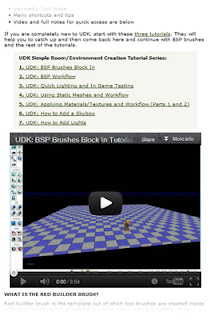
BSPs, Brushes, Static Mesh...Oh my!?

No, unlike the thousands of other blogs out there dedicated to game engines, this isn't a post or tutorial on how to make them. It is more of a introduction if you will, or a report on a great tutorial site that has helped me immensely.

Last year I was working with UDK for really the "first time". I became very frustrated with the lack of valuable documentation on how to learn the cryptic program. There wasn't a book out that was up to date with the newest build. Most of the docs and forum posts were for those who had a running start from Unreal Tourney 2004 and it's editor. I searched forums and sites and it seemed there just wasn't any awesome "noob" stuff available...not that I could find at least. To make things worse, the newbie stuff I did find was more of a kick in the pants because any of the online videos were too fast to follow as the creator was a noob themselves on instructional design... most likely they were great at UDK, but pretty shitty at instructing! They either spoke too fast, were sloppy and had lots of unedited retracing of steps and "oops" moments, glossed over major steps leaving me wondering where they were, or they simply rambled on about needless stuff swerving ever further off of topic. So I put the program away for a while and averted my attention back to the rink and puck, my portfolio stuff, or tended the garden or something. I just wasn't ready for the learning curve that was required... yet.

Certainly UDK is a powerful program, and a great engine to know if you are a game developer, but the monthly release schedule they have in place leaves the engine and it's interface changing constantly so it made it quite difficult to keep up with. The last download I yanked from Epic was the February 2011 release; I refuse to update monthly... lol or even YEARLY as it seems, because last month I fired up the old bitty and made a concerted effort to jump in and learn the frickin package... well, at least begin to scratch the surface of learning.

I opened the program and anything I had learned the previous winter was a distant blur that was too hard to recall. So...back to Google I went. I typed in "UDK BSP creation" and the expected list of blah blah blahs from the Epic Games forums or you-tube-eries was not delivered. Instead a new site that I had yet to discover found it's way to the top... "World of Level Design"

Upon opening the first tutorial on the list I was greeted immediately with a pleasant and professional sounding voice; though there is a slight accent which may be hard for some to decipher. The pace with which the instructor (Alex) presented the information was both comfortable and informative. I learned more watching the first three videos of his series than I had during 2 weeks worth of book/forum/youtube learning sessions during the previous winter.

After watching a few of Alex's videos I subscribed to his site and gained access to two "free" pdf files to assist in level design and game creation. Both of them sit unopened on my desktop because I have a feeling they may rehash most of the material I already teach my students in class (Game theory, pre-production, map/character creation, etc...) but I thought it was pretty cool that he offered these up to fledgeling designers. I will open them eventually and who knows, I may be pleasantly surprised with what I find.

Now even though this tutorial series is great for a beginner...and the use of Builder brushes and BSPs...it still moves past a few of the crucial components of developing Static Meshes. Perhaps the problems I had were due to my pre-production pipeline, but I had a huge issue with bringing in a model and it's textures from Max to UDK. Granted, the model was not built for a game, and this may be the culprit, however, following the different sites and tutorials I found still didn't solve the issue for this particular model.

I built an office chair in Max and mapped it to my likings to be rendered in a max scene environment. I placed materials onto the seat and back using bitmaps for the diffuse and bump channels. I used procedural maps for the plastic components and chrome components and the whole model looked quite nice. After following the step-by-step process of baking the textures and exporting the.ASE file I switched over to UDK to import the Static Mesh and when I did, it came in all checker-boardy.

"Huh. That's not what it's supposed to look like" I thought. So I went back to max and played around a bit with the model and read a bit more in the tutorials and tried exporting as a different file, this time the .FBX. Similar results. This time the Plastic worked, but the chrome and seat didn't keep their texture. So I stepped back. Perhaps it was in the process of how the model is put together? I decided to start from scratch with a simple bookcase.

This time, when creating the model I reflected back on some of the text from the tutorials; They spoke of "Attaching" the editable polys under the Edit Poly modifier on the stack. Hmmm... Perhaps rather than creating multiple editable polys and attaching them, I would try creating a single polygon mesh. Starting from a simple box, I created a bookcase with the editable poly using the extrude modifier. I added the UVW mapping, and then unwrapped the UVWs as instructed. When I mapped the item though, I used a multi/sub-object map for the case. I wanted the grains in the wood to go in different directions, based on the back/sides/shelves of the unit. So rather than have three maps for the one case, I figured one mulit-map would be easier.

Once the map was applied to the different channels of the case, I rendered the material to texture (baked it) and then exported the whole unit as a .FBX file and then imported it into the level I had developed. Sure enough, the bookcase was imported with the textures intact. Now... I can't say if it was one, or the other, or both that caused the texture to import properly, but I can definately rework through the problem with the chair and try to map the entire model with a multi/sub-object using the "Attach Poly" method.

I can't imagine every model having to be a single object in order to map it properly. I may even have goofed in part of the baking process, however as this is a lesson in mistakes and trials and error, I offer only my experience as fodder for your learning. And certainly, should you KNOW the answer the problem I am having, please comment and let me know your solution.

Later this week I will show you the iterative process in which I created the level this scene/screen shot is from. It's mostly a build off of the WoLD tutorial I mentioned earlier (Rooms, lighting, maps) but I have an idea that I want to take to completion. What better of a place to share it than here, no? Until then, happy gaming! I'm off to go spelunking in a Dwemer Ruin.

-Chad

Chad is an Adjunct Faculty member teaching video game design in Boston, MA. He is currently a freelance designer and owner of Phlume Artist Management. He can be reached for comment there. http://www.phlume.com

April 23, 2012

WAKE UP!


I know... I Know...
It's been a while since I've posted ANYTHING. Please pardon my absence.

Last fall was a busy time for me with teaching and school starting (not me just yet).Then Skyrim came out and EVERYTHING was put onto the back burner. Then Christmas came and went. More Skyrim. I worked on my own games and portfolio for school... Needless to say, the absence has been long enough and I am back to write for you again.

A lot has been happening in the game world and I haven't written a single thing about it. GDC came and went. PaxEast came and went. Releases of skyrim, MW3 and a whole host of other games... to talk of them now would be old news. E3 is on the horizon and though I have my passes, for a second year in a row I will not be able to attend. It just costs too much to fly out there form the East coast. I will get there soon.

There has been a bunch afoot in the PC/CPU world as well. I started a series on building a gaming rig and got two postings into it before my hiatus from blogging. Now that I am back at it the foretold LGA 2011 in that posting is now out and available, Intel is slated to release Ivy Bridge any day now, NVidia launched the new GeForce GTX 680 GPU ... I may as well start fresh and rethink the build from the start... well, It will still be Intell, not AMD. ;-)

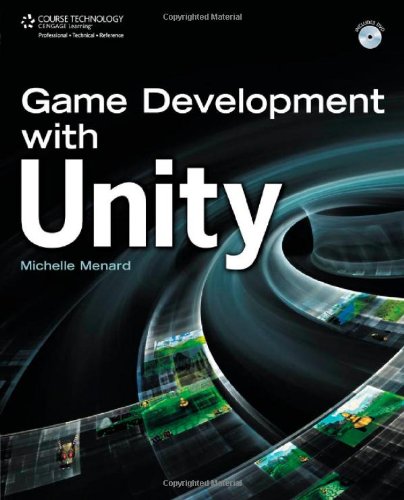
A lot has happened in my world as well. I am continuing to finish the application process for Savannah College of Art and Design (SCAD) in the hopes for a June start for my MFA. I have been designing two games for part of the admission process... One is a board game based on the music industry and the trials and journeys of a small band from a garage to stardom. be the first to earn $1,000,000 and reach the "stars" and you win. The other "game" really is more of a level design created in 3DS max and UDK. I am also working through the book "Game Development with Unity" by Michelle Menard (SCAD Alumni) and I am enjoying the learning process.

Now that I have "caught you up" it is time to focus on the future of this blog and my plans for how to roll out new posts on a schedule. I want to put forth a concerted effort to post at least once a week about one of three things:

1. My thoughts and experience regarding the use of UDK, Max, or Unity.
 As I work through Michelle's book, design/develop my UDK level, or refine my models in Max to be static meshes in UDK, I will post my findings, hurdles, hang-ups and resolutions here. Not only will this force me to write on the blog, it will share what I have found from other blogs, videos, and help files. It will not necessarily just be a rehash of other posts, but rather a finite look at my specific issues and problems and how I worked through it. I continually find that I have to watch four or five videos and read 2-3 articles to actually find all of the information I need to complete my project. Helpful places/videos will be placed onto the "Links" page.

2. Talk/Write about the process of refining the board game.
 Since this is board game is a work in progress that I plan on refining to be a possible product on the market, I need to tread carefully on the actual postings of the design process. Rather than discuss specifics about the game, I will talk about some of the design principals surrounding the process and how I handled the challenges, rule sets, systems and design. Hopefully within a few months it will be an actuall game available on the market and you can buy it from me!

3. Thoughts on the PC I will build for my enrollment at SCAD for my MFA.
LGA 2011 is out, Ivy Bridge is due to be released in... did it come out today? April 23rd? I don't know... Any day now it's due out. How much RAM? What Video card(s)? SSD or HDD? Monitor choices, peripherals, drives, case, fans, cooling... The works. As I "sus" out the computer and research the components, I will discuss them here. I will link to other forums where I post my thoughts and you can follow the threads about my ideas and other PC builder's input about them. I will also place a link to my newegg.com "Wish List" so you can look at the exact specs and prices to the items I want to buy, and it saves me rewriting them here!

Lastly, as time rolls on and I begin (hopefully) my Master's program in Interactive Design and Game Development at SCAD, I will do my best to report out on the classes, my experience and projects I complete through the schools top rated eLearning program. Recently the school was given a #7 on a Top 10 list of "Who's Who" for game design degrees. For those curious... Full sail didn't make the top ten. My first choice, "Guildhall" at SMU was #5, however they do not offer a distance learning option. MIT was at the top, but that was more of a coding and software engineering focus.

Thank you for reading and I look forward to sharing more with you as time rolls on.

-Chad

Chad is an Adjunct Faculty member teaching video game design in Boston, MA. He is currently a freelance designer and owner of Phlume Artist Management. He can be reached for comment there. http://www.phlume.com

September 6, 2011

New Computer - Part 2a (Motherboard)

NEWEST NOTE (4-23-12)
I have stopped this series (sort of before it even got going) because the architecture and components I was focusing on are now a bit out dated. Please continue to read the new posts and follow the series I will start labeled SCAD RIG to catch up n the new PC I plan to build for my MFA.

(Continued from the Part 1 post "AMD or Intel")
NOTE: I know less about hardware than I do software. I know enough to get by, and that is where the interactivity of this series of blog posts will come in. If you see something that you may laugh at, don't flame me... just guide me as I would guide you if you wanted to know something I knew about. I am not an expert computer builder so please do your own research and follow the advice of others as well and make an educated decision on your own.

Now that we've (well, I) decided to go with the Intel chip for our computer, it is time to think about a motherboard to set it onto. We've narrowed the choices down a bit by deciding on the chip set, but the choice is still not an easy one. There are still many, many factors to think about when choosing a motherboard. One of the main questions you need to ask at this point is "What will be my computers main purpose?"
New Sabertooth P67 board


Are you a web surfer and casual user?
Are you a casual gamer who plays some titles online and a few PC releases?
Are you a hard core gamer playing "top of the line" releases the day they come out?
An artist? A programmer? A business person? A Student?

Knowing what you want out of your computer will help you decide what you need to put into it for technology and components. A casual web surfer will not need nearly as much processor power or memory than an extreme gamer. A video editor will need loads more storage space than an average artist or programmer. Student? Get massive storage space for all the videos and music and games you will end up downloading, as well as good amount of memory and processor speed for multitasking while "studying" ;-)

Deciding what your computer will need to handle beforehand can save you a lot of time and money in the long run. I am going to be using my computer for digital animation, high end 3D animations and rendering, as well as some hard-core gaming. The build I will post about in this series will follow the specs needed to complete a powerful enough system to complete these tasks with ease. I will be looking for higher video resolution and multiple display capabilities, a lot of physical memory and storage space as well as multiple core processing power (so I can multitask with various programs at once). Even though I would like to max out my computer from the start, that would be an expensive way to build a computer. Remember… you can usually add more components later on down the road, and save some of that precious cash now for other bills.

As I know I want to have a relatively fast machine from the start, with enough room for upgrades later, I will be looking at the expandability of the motherboard and possibility of using it for the next 5 years or so. If Moore's Law continues, the computer I build today will be 8-10 times slower than the market. So... if I want to try and stay on top of that curve, I should make sure I create a system that can be upgraded over the years. Unfortunately there is no sure fire way to stay ahead of the curve. New processors are released all the time and the architecture needed to run those changes with it. 

(A lot of the following decision process was pre-decided, which is why I went with the i7 2600k, but my logic will be broken down here...)

LGA 1155
Right now the big “Intel decision” is whether or not to go LGA 1366, 1155, or wait for the new LGA 2011 to be released. This topic is an entirely different thread all together so I will leave that for you to research…For now, I am leaning toward the LGA 1155 because of the high probability that the new Ivy Bridge will be backwards compatible to the 1155. If that changes, so shall my focus on the 1155. Plus the Sandy Bridge i7 processor can be overclocked to nearly 5 Ghz. That works for me!

We now know we are looking for an Intel based board with a CPU socket type of LGA 1155. Now we are getting somewhere...our choices are getting slimmer. (From 377 Intel boards on Newegg.com, down to 209.)

Lets narrow the search down a bit more. As far as I can see (again, I'm no pro builder), there are a few key areas that can be considered "upgradeable" when working with an existing board. As we are starting from scratch with the hopes of using the technology through the years, our Motherboard needs to be set up and ready for the future technology. Some key components that can easily be upgraded over time are the processor, the memory, and the peripheral cards in the slots. The processor goes into a slot, or socket, and that slot has to be forward compatible for the next wave of architecture in order to upgrade. (Head back to the LGA 1366, LGA 1155, or LGA 2011 debate). If they switch the slot/socket style you are limited to the processing power that is set up with that type of "seat". As of now there is discussion that Intel's 2012 "Ivy Bridge" chip will be backwards compatible with the 1155 socket style.

Asus P55TP4XE circa 1996
We also need to take a look at the "Northbridge" information on the board. To lighten this article a bit, Northbridge technology is discussed here.

...And this information is a nice bite sized chunk on how to choose between them.

Knowing that I want to overclock the system, reach for more DDR3 RAM over time, and have multiple video cards and I also want to look at a relatively less expensive system, I'm going to shoot for the P67. I may research the Z68 boards with a LGA 1366 socket a bit more though as the maximum RAM jumps quite a bit for those boards (...from 32GB to 48GB).


So... We now know we want to primarily look at LGA 1155 P67 Intel boards. (However, we will keep an eye on the LGA 1366 Z68 as well. But a decission to go with this type of board would change the processor type to an i7 980 and increase our cost on the processor by about $200). This brings us down to 120 boards. Still a lot to choose from, but our options are thinning out.

Lastly I want to look at the Memory. I know I want quite a bit of memory available as a maximum so I'm going to look for the top end of LGA 1155 p67 boards and they are at 32 GB of RAM right now. If I narrow my Newegg search this lands us at only 55 results (with another 46 available in the Z68 line.)

With 55 "LGA 1155 P67 Intel" boards to choose from we have cut down our search considerably. Part 2b of this article will narrow that choice down to two or three options, perhaps 2 P67 boards and 2 Z68 boards to keep options open.

As you prepare to venture down the road of purchase, wading through the sea of motherboards that are available, keep in mind the technical capabilities you want the system to be able to have at the start. Also be aware of the maximum expandability you want down the road, and the cards and memory types you plan on buying to outfit the computer with. Armed with this information you can better assess what the requirements of the board will have to be to suit your needs.

Chad is an Adjunct Faculty member teaching video game design in Boston, MA. His school web site is http://www.phlume.com/EDU. He can be reached for comment there.

August 30, 2011

Game stop stopping growth?

Who is GameStop fooling?
Recently in an interview with Edge Magazine, Executive Vice President of GameStop International Mike Mauler revealed that GameStop, as a company, has "sat down with developers and publishers and really gone through the data." What data you ask? The data that claims that selling used games benefits the publishers as well as the developers. I know as a consumer I will search for the best deal I can, and if I can scoop up a Modern Warefare 2 for $19.99 as opposed to $49.99, I'm going to do it.
I can see how the data may help the execs at GameStop sleep at night, but perhaps there is more to the story; and more that they could do. The higher ups at GS say that by reselling the games used they help bolster the sales of the new titles in series. They offer up the titles again to a new audience and that "hooks" the player into buying into the series. Perhaps this works, but why not take a direct approach to support the industry that feeds them?

Don't read me wrong. I am not saying GameStop should stop selling games used...but rather share in the wealth. After all, this could easily be a win-win-win situation if everyone approached the idea objectively. Though it is a hard concept to imagine; let's take capitalism out of the equation for a moment. If GameStop stands behind their position that the reselling of used games feeds the market with older titles and helps fuel the purchase of newer releases, why can't they also put an effort in to insure that the used buyers do purchase the newer titles?
 Speaking from personal experience...

I bought my PS3 this past spring and when I purchased the system I bought it new with the Move/Sports Champion bundle. I also bought 2 additional titles to play; Assassin's Creed II and Modern Warfare 2. Both of those titles I bought used for nearly a 50% savings at GameStop. I signed up for the company's "Power Up" rewards program and the purchases counted as points toward future purchases. Which is great for me because now I can get $5.00 off of a used title, or $10 off of a used title in the future by redeeming my points. This is the capitalism part I mentioned come into play. I'm not sure of the "formula" that GameStop follows in buying and reselling games, but I assure you that it is enough to build a business on. My guess is if I brought a new title to them (lets say LA Noire) they would give me $25 - $30 bucks for it. They would then turn around and sell it for $50 - $55. A $25 profit for allowing it to sit on the shelves just long enough to change hands. Even if a consumer redeems enough points to earn a $10 off voucher, the company still makes $15 on the sale. Rockstar games, however, only sees the original $60 I spent, but none of the used purchase.


Here is my proposal: GameStop continues to offer the awesome used deals and rewards programs to the consumer as is. No changes. With a little bit of data tracking, GameStop issues reseller's fees to all the developers and producers of games which they resell. A 20-25% fee should be returned to the original maker of the game. Lets follow the formula again, with the added fee:


I buy LA Noire for $60. I bring it back to GameStop a few months later and sell it to them for $30. They turn around and resell it for $55. Using the 20% model, $11 should go to Rockstar for the reseller's fee, and GameStop pockets $14 in profits. Still not a bad take for not really doing anything... However, Rockstar is now cut into the circle. extrapolate this formula across 100,000 titles nation wide and you have yourself a fresh $1.1 million in revenue for Rockstar... Additional income above the original totals for the sale of the games originally.  
 
Now certainly the model isn't perfect. but in theory the idea would prove to be a great marketing strategy for GameStop. Why would I go to BestBuy or FYE when I can go to GameStop and get the awesome deals and know money is going back to the creators to support their hard efforts. I can see it now... "GameStop. Power to the players; Powering the industry"
I don't know... I may be wrong, but don't you think it would be in the best interest of GameStop to do everything they can to support the gaming industry and not piss them off? What do you think? I know GS would never go for a kick back to the publishers.. but what else could the company do to stay a positive "middleman" and not make either side upset?

Chad is an Adjunct Faculty member teaching video game design in Boston, MA. His school web site is http://www.phlume.com/EDU. He can be reached for comment there.

August 23, 2011

New Computer - Part 1 (Intel or AMD)

NEWEST NOTE (4-23-12)
I have stopped this series (sort of before it even got going) because the architecture and components I was focusing on are now a bit out dated. Please continue to read the new posts and follow the series I will start labeled SCAD RIG to catch up n the new PC I plan to build for my MFA.

 NOTE: I know less about hardware than I do software. I know enough to get by, and that is where the interactivity of this series of blog posts will come in. If you see something that you laugh at, don't flame me... just guide me as I would guide you if you needed to know something I did. I am not an expert computer builder so please do your own research and follow the advice of others as well and make an educated decision on your own.

When I was in my first year of college as a 3D animator back in the late 90's I had the pleasure of designing my first computer with the help of a reseller online. It was a Quantex brand computer... and unlike the Rain Man "Quantas never crashed..." quote, this computer crashed. Often. Perhaps it was Windows 95? perhaps it was the software loaded? Who knows. What I did know was that I outgrew the specs on that computer really fast.


I still have the spec sheet on it as I knew it would be fun to look at someday. It was printed on a dot matrix computer though so it is a bit faded. From what I could make out (and remember) the main specs of the machine were as follows:

300Mhz P2
32mb of RAM
8mb video card
8GB of hard drive space
56.6 dial up modem
and a 17" CRT monitor...
All for just over $2,000

Times sure have changed! Here it is in 2011, nearly 15 years later and I'd like to build a new machine. I figured I could create recurring blog on this site detailing my personal experience designing and building my new computer. I know there is a lot of research out there but I thought it may be fun to document my findings and share with the masses my personal choice. Not to mention grown and learn from the feedback that may be offered in return.

First things first: In designing the computer I want to set out knowing what I want the computer to be
able to do and handle. I could get away with the basics if I was going to surf the web and write a book on the machine... but as you all know, this is NOT the kind of tower I want to design. What do I want to do with this computer? Well being a gamer and designer I need the computer to handle a lot of high end graphics. Let me make a list of the games/software that may be running at any time on the machine, most often, 3 or four of them open at once:
  • A high end image/vector/video editing program (PS, IL, FL, AE, PR, ID...)
  • 3DS Max, Mudbox, Maya, and UDK
  • Possibly Unity or Torque
  • Office suite (excell, word blah blah blah)
  • A variety of smaller programs such as a browser window, notepad editor, mail client, AVG antivirus...
As for games, well I use the PS3 a lot for that now, but i am very interested in Dungeon Seige III and possibly From Dust... at least at first glance. but both of those would run easily with any system I set up to design/develop so lets focus on the 3D modeling/rendering and video editing capabilities of the machine.

AMD or INTEL?
As I embark on the first of many MAJOR decision of this new build, I will have to rely on what I can find/read online. My intuition tells me to go with an Intel chip. From what I have r
ead they handle graphics a lot better. Am I wrong? This is where the feedback from the blog readers comes in. I was looking at the Core i7 2600K, "Sandy Bridge" (I'm thinking waiting for the Ivy bridge may be expensive, and Time consuming... thoughts there?). I noticed the 2600K and upon reading further the "K" means it is unlocked and you can overclock it, right? Though I have never over clocked a computer before, I think it sounds like an interesting idea and would certainly be interested in trying it. So for $15 - $20 bucks or so, I'll keep the "K" there and leave the option available.

The Intel chips are a bit pricier, but budget is secondary to a good, stable build. Oh... and speaking of budget. Don't get me wrong. I don't have thousands to drop on this computer so I will try to keep my entire budget to under $1000, leaving room for expansion over the next few years.

Intel Core i7 Quad Core 2600K 3.4GHz:
New Egg: $314.99 (link)
Tiger Direct: $314.99 (link)

Total budget in: $314.00

So now that I know I will be going with the Intel chip my next post will review some of the motherboard options. Before I close though, I'd love the feedback from the masses on i3, i5, and i7. Knowing what I'm doing should I even look at the i3/i5 processors? I'm pretty set on the i7 Quad core. If I have the cash I'd go for the hex.. but that may be too much muscle for the price right now.

Thoughts?

-C
Chad is an Adjunct Faculty member teaching video game design in Boston, MA. His school web site is http://www.phlume.com/EDU. He can be reached for comment there.

Commitment level...

This post isn't going to be about the latest engine, coolest game, tricky megatexture topics or molecular modeling... it's about commitment. In life, at work, in school, what are YOU willing to give to get it all?

As finals week kicks off here on the North Shore of Boston, I expect to see a variety of projects, animations, models and papers come streaming into my inbox and land on my lap(top). As I prepare to start the grading process on the student's work I think about the scary fact that I too will be a student again soon. I have to think about the idea and pause...I reflect for a moment at what I would like from my eventual professors as I embark on my next leg of educational journey. What kind of dis-service would I be doing to myself if I passed in the bare minimums and never tried to push the limits? Will i be making the most of my education, and setting myself up for a future in the gaming industry? The short answer is Hell no. How then, do I turn this thinking around and present it to my students?

Over the last handful of years teaching a variety of topics focused around digital art and the creation thereof, I have come across some stellar projects. However, for every one to two kick as examples I have had to wade through a sea of mediocrity. It kills me that students would devote only a portion of the time given to them to completing a project to actually working on the project, yet nearly 3/4 of the allotted time on YouTube or a playing 3DS and "talking" about what an awesome project they are going to create.

I understand not everyone can create incredible art. It is a talent...and a hard talent to master. I'm not looking for "talent" per se though. I'm usually grading on effort. It really amazes me that people would turn in some of the stuff that they do. Example... (No this hasn't happened, thankfully, but it is an example of what I am speaking of)

If I were to ask you to create a list of 5-7 game-play challenges and write a few paragraphs about the challenges and how they work, citing examples of different solutions. What would I be looking for?

An under achiever sees 5 challenges, one to two short (4-5 lines) paragraphs each that provide an overview of the hurdle listed.

Sigh.
(...Insert noise of a raspberry here)

For those that are less inclined to scrape by at bare minimums, you might be the type to pass in 6-7 challenges with decent descriptions of them all. Some would have shorter descriptions than others, based solely on the limited context needed to set the challenge up, but thorough enough to deliver a nice, clear and concise description. Alright... getting better..

Now... What am I looking for? Since I'm trying to prep you for the "real world" of an industry of giants that will not hesitate to scarf you down like last nights leftovers on an early morning ravenous binge... I want nothing short of brilliance.

Give me diagrams, sketches, descriptions and game play examples. Challenge me with new ideas and crazy twists on an outdated and tired theme. Don't pass in a timed maze... Make it fresh. Make it whimsical. Give me some sort of pattern recognition challenge with a logic twist. Surprise me with a moral challenge based purely on an economic standpoint. However, don't break my suspension of disbelief or the harmony that exists within your game's framework. If your game is a futuristic shooter set in a world similar to star trek... DON'T be foolish and reference Star Trek! Stay original. Maintain the harmony of the game and keep the "real world's" fiction realms out of your fiction realm.

Obviously, I understand the students are just that...Students. They are learning. The fact is though, if I don't try and push you further, you are going to fall into a sea of hopefuls and never be discovered. Unless you, as the student, take the time to push the limits of your own creativity, press the boundaries of your imagination and avoid what has already been done 1000 times over... you are never going to go anywhere but to the counter of your local Game Stop and purchase the games that your fellow students helped to produce.

-C

Chad is an Adjunct Faculty member teaching video game design in Boston, MA. His school web site is http://www.phlume.com/EDU. He can be reached for comment there.

August 11, 2011

Day late... but I'll keep the dollar.

Bear with me... I know these have been out for a bit, but I just found them so deal! Yeah...I'm new to the PS3. We know this (well, you do now). I've been a Nintendo kid all of my life, but with the tax cash I got this spring, I snagged a great deal on my 250GB PS3 Move bundle. I don't get a whole lot of time to play games for hours on end like I used to, but I did take the opportunity the other night to check out some very interesting demos. Mostly because they were free, but also because I wanted new blog fodder. Guest what... Found it!

The first game I found was Flower. thatgamecompany released an "emotive" follow up to it's debut release "flOw". This unique experience came out in 2009 so yeah... I'm behind the 8-ball on this one. But it doesn't mean I cant discuss the newness of the discovery to me, right? Flower is actually a very nice looking and pretty game, well ok not a game... it's more an experience. There isn't a lot of game play involved in this as far as I can see. You control the wind, blow some petals off of plants, and bring life to the dull landscape. Definitely an original concept, but I wouldn't call it a game. To me, a "game" has to have a certain level of challenges and obstacles the user must face and complete. Sure "Flower" has different levels you can navigate through, but there is no challenge apart from the occasional miss that happens when you speed up from a zephyr to a breeze and end up blowing past a few crucial stems. Yes, I know, I only played the demo.. but that was enough for me really. I saw the proof of concept and it fell short as far as I'm concerned. The music was alright; kind of relaxing and tolerable. No award winner there either though. The graphics were colorful and wispy... dreamlike... the high contrast offset the dull landscape which really made the scenery POP when the growth came to life and you passed a stage. This dreamlike feeling was what they were going for over at thatgamecompany I think, right... A Flower's dream world? In any case. If you want a free download to spend a few hours of your time trolling across a landscape in a semi open environment as an air elemental of sorts, grab the game. I wouldn't suggest buying it though.

The second "Johnny come lately" title I checked out that I wanted to post was "Echochrome." Another very innovative and original title. From 2008. This is interesting...Where "Flower" fell short on challenge and puzzle "Echochrome" came through with shining colors... well, sorta. In a weird juxtaposition to "Flower", this game is entirely in black and white with simple 8-bit-esque graphics. The challenges, however, are quite fun. Picture yourself in an impossible visual puzzle, sort of an Escher style drawing, or one of those optical illusion images you found in science books from 5th grade. Now, picture plaing as a pose-able artists mannequin and navigate around those illusion drawings on the map/path to avoid the pitfalls. That's Echochrome. Though a slight challenge, it was not enough to keep me engaged for more that the demo. In fact, I was bored before the demo was finished. One good thing came out of the Echochrome experience, however. All of those shapes made me want to play Tetris which I was thankful for. Both colorful, and challenging... Tetris that is.

Both of these games were quite unique from anything else I have played lately, but still not enough to impress me to purchase them. I'm glad they were free...I would have been kinda pissed if I paid anything for them. Sure both have that addictive quality to them which is why they are probably on there in the first place. I see these more as an smartphone or handheld app though. For some people, the games could be a nice way to mellow out after a difficult day of laying stone New England in January, or roofing work in July in Phoenix. But for me, as a game design instructor... they cause me more stress than my unruly college students. At least the students interact back in an unpredictable manner. If I was an individual who graded games for a living, I would give these both a, wait. I don't grade games for a living.

But tell me... Did you feel the same way? Have you played these? Did you BUY either of them? Do they get any better? Am I missing out on something grand by stopping at just the slice offered for free? I'd love to know if it is worth the coin to download the full versions. Do tell.

August 6, 2011

Mobile gaming?

(Note: "Words with Friends" isn't available on BB... my WordRival username is Phlume. Invite me to play...)

As I sat back and played Word Rival on my Blackberry this evening I couldn't help but wonder... Is Mobile gaming going to take over the home console system much like the consoles destroyed the arcade?

Apple's iPhone 4I look at all of the apps and games that are available across the board for Android, iPhone, iPad, Blackberry, DS, PSP, and the like. It is truly amazing at how cool these things have gotten! They are beautiful, powerful, and way better than some of the AAA titles that came out even 5 years ago. I remember about 10 years back, sitting down with my Nokia and it's black and green screen, charting a course for my snake to traverse in order to eat the next apple. I thought it was cool that I could play Tetris on that same phone... even though it was as slow as all hell, not very challenging, and hard to play because of the screen size. Flash forward a decade and you have touch screens, analog joysticks, multiple buttons and full 1080p... ON A HAND HELD! Remember the Gameboy; the classic "Brick"...Before that came out all I had for a hand held game was a crazy orange and black "spelling bee" device that helped me learn difficult 5th and 6th grade spelling with word games. I never imagined as I sat with that little speak and spell wanna-"bee" device that the gaming community would grow into a huge mobile empire.
Sony's Playstation Vita
When I reflect back on the 80's and the arcade games we stood at for hours I thought of the home VCS as a silly amusement past time we used to tide us over to the next visit to the Dream Machine, or Funspot. It's hard not to look at the mobile community as creating a similar dichotomy within the gaming industry; The home system vs. the hand-held.

As microprocessors get faster and smaller, we are seeing more and more computing power being placed into smaller and stronger devices, which in turn get placed into the hands of younger and younger consumers. Both of my children, 4 and 5, constantly ask me if they can play a game on my phone. I watch them as they fumble with the device and press the number pad and directional pad to navigate around the screen in whatever game they pull up. It's cute... but scary. When I was 5 I had a joystick and one button. Here they are with the Vita at their door step, the Wii U on it's way, augmented reality and the 3DS available and a plethora of games on phones and pads everywhere. Which makes me wonder... Will the home systems be shoved away for more powerful portable ones?

As we look to see the next gen of consoles scheduled to be released within the next 12-18 months, one wonders if this will be theSamsung's Galaxy S2 last ones dedicated to be hooked up to a TV. Perhaps the ones we use today already ARE the last ones to be tethered to a tube? Will video games pick up and go mobile entirely? Will we ever have a need for cluttered living rooms with controllers and cables stuffed into drawers with cartridges and disks laying about to collect dust? Or are we seeing a shift in the paradigm that gaming systems are to be kept within the home?

What do YOU think? As I close out this final thought on a long week and head into the weekend I ask you: Are these the final round of systems that will stay within the house? Will we see a "changing of the guards" so to speak when it comes to how games are delivered to the masses? Tell me your thoughts. Share your insight and views.

Until next post... happy gaming y'all.

-C

Chad is an Adjunct Faculty member teaching video game design in Boston, MA. His school web site is http://www.phlume.com/EDU. He can be reached for comment there.